
.
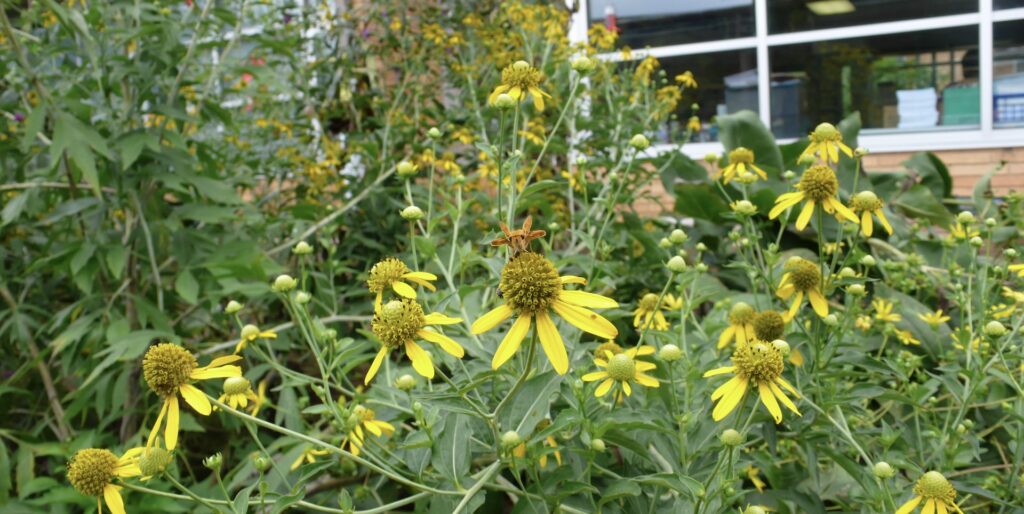
Plaza Midwood’s Gardening, Landscape, Ecology and Environment group (GLEE) is developing a Pocket Pollinator Patch near the Community Garden in Midwood Park. We hope it will inspire families to develop their own pollinator patches. As Charlotte development advances, area pollinators have fewer and fewer safe places to feed, shelter and grow. Butterflies, bees, caterpillars, hummingbirds and other creatures need our help!
Pollinator patches are fairly simple to start and maintain. Using native plants makes for resilient, low-maintenance gardens. They’re great for pollinators, and lots of fun to watch.
Keep an eye on our patch as it develops. For those interested in starting their own patches, GLEE plans to put together starter sets of native pollinator plants for sale in the spring.
To create a pollinator patch
• Pick a nice, sunny spot (not too big!)
• Remove grass and other vegetation
• Mix in compost to loosen soil, add nutrients
• Choose your pollinator plants (about one per square foot)
• Plan to have something blooming from spring to fall
• Plant in spring or fall. Mulch
• Water (especially the first year)
• Enjoy!
Note: Don’t completely clear the patch in winter. Many pollinators spend the winter hibernating under leaves or in dead stems.
Native plant possibilities: Violets,* Blue-eyed Grass, Golden Alexander,* Baptisia,* Phlox, Coneflowers, Butterfly weed,* Black-eyed Susans, Senna,* Asters, Goldenrod.
* = caterpillar host plant