
.
Steps
• Pick a nice, sunny spot (not too big!)
• Remove grass and other vegetation
• Mix in compost to loosen soil, add nutrients
• Choose your pollinator plants (about one per square foot)
• Plan to have something blooming from spring to fall
• Plant in spring or fall. Mulch
• Water (especially the first year)
• Enjoy!
Note: Don’t completely clear the patch in winter. Many pollinators spend the winter hibernating under leaves or in dead stems.
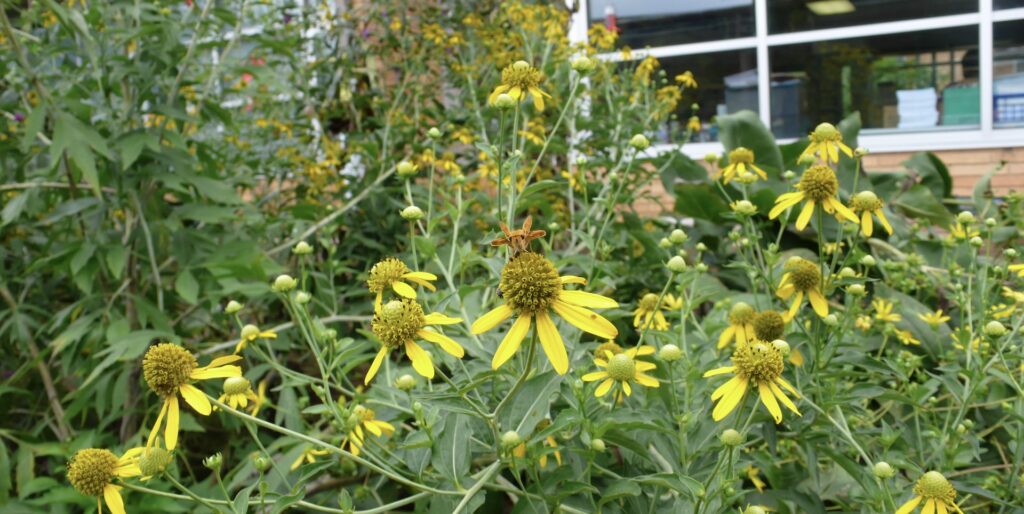
Native plant possibilities: Violets,* Blue-eyed Grass, Golden Alexander,* Baptisia,* Phlox, Coneflowers, Butterfly weed,* Black-eyed Susans, Senna,* Asters, Goldenrod.
* = caterpillar host plant
Midwood’s Gardening, Landscape, Ecology and Environment group (GLEE) plans to put together starter sets of pollinator plants for sale in the spring.